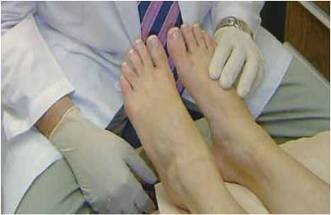
PODIATRY
While not part of BILHPC : BMA
we refer our patients to the following podiatrists
Dr. Edward Mostone 781-396-8737
Dr. Yena Do 617-821-6329
Dr. Emily Cook 617-354-3131
Dr. Jeremy Cook 617-354-3131
Dr. Philip Basile 617-354-3131
we refer our patients to the following podiatrists
Dr. Edward Mostone 781-396-8737
Dr. Yena Do 617-821-6329
Dr. Emily Cook 617-354-3131
Dr. Jeremy Cook 617-354-3131
Dr. Philip Basile 617-354-3131
Think of Your Poor Feet
By Laurie Tarkan : NY Times Article : June 19, 2008
In Brief:
Huge numbers of people develop foot pain in their 60s, but it can start as early as the 20s and 30s.
Excessive weight, diabetes and circulation problems can contribute to foot pain.
Proper footwear and regular exercise can play a crucial role in preventing foot problems.
The average person walks the equivalent of three times around the Earth in a lifetime. That is enormous wear and tear on the 26 bones, 33 joints and more than 100 tendons, ligaments and muscles that make up the foot.
In a recent survey for the American Podiatric Medical Association, 53 percent of respondents reported foot pain so severe that it hampered their daily function. On average, people develop pain in their 60s, but it can start as early as the 20s and 30s. Yet, except for women who get regular pedicures, most people don't take much care of their feet.
"A lot of people think foot pain is part of the aging process and accept it, and function and walk with pain," said Dr. Andrew Shapiro, a podiatrist in Valley Stream, N.Y. Though some foot problems are inevitable, their progress can be slowed.
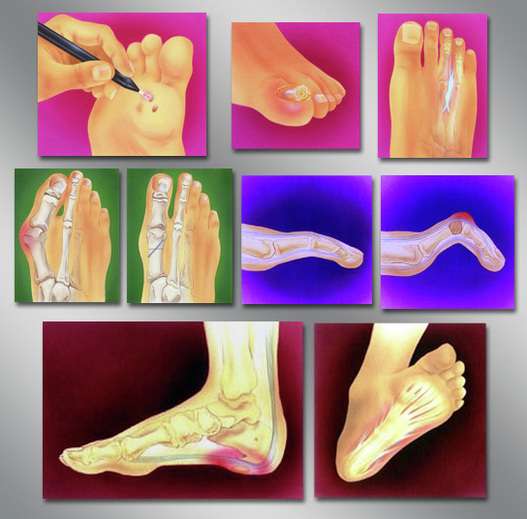
The most common foot conditions that occur with age are arthritic joints, thinning of the fat pads cushioning the soles, plantar fasciitis (inflammation of the fibrous tissue along the sole), bunions (enlargement of the joint at the base of the big toe), poor circulation and fungal nails.
The following questions will help you assess whether you should take more preventive action as you age:
Are you overweight?
The force on your feet is about 120 percent of your weight. "Obesity puts a great amount of stress on all the supporting structures of the foot," said Dr. Bart Gastwirth, a podiatrist at the University of Chicago. It can lead to plantar fasciitis and heel pain and can worsen hammertoes and bunions. It's also a risk factor for diabetes, leading to the next question.
Are you diabetic?
Being farthest from the heart, the feet can be the first part of the body to manifest complications like poor circulation and loss of feeling, both of which can lead to poor wound healing and amputation. Diabetics should have their feet examined annually by a doctor and avoid shoes that cause abrasions and pressure.
Do you have poor circulation?
If you suffer from peripheral artery disease — a narrowing of veins in the legs — your feet are more susceptible to problems, said Dr. Ross E. Taubman, president of the American Podiatric Medical Association. Smoking also contributes to poor circulation.
Do your parents complain about their feet?
Family history is probably your biggest clue to potential problems.
Do you have flat feet or high arches?
Either puts feet at risk. A flat foot is squishy, causing muscles and tendons to stretch and weaken, leading to tendinitis and arthritis. A high arch is rigid and has little shock absorption, putting more pressure on the ball and heel of the foot, as well as on the knees, hips and back. Shoes or orthotics that support the arch and heel can help flat feet. People with high arches should look for roomy shoes and softer padding to absorb the shock. Isometric exercises also strengthen muscles supporting the foot.
Are you double-jointed?
If you can bend back your thumb to touch your lower arm, the ligaments in your feet are probably stretchy, too, Dr. Gastwirth said. That makes the muscles supporting the foot work harder and can lead to injuries. Wear supportive shoes.
Do your shoes fit?
In the podiatric association's survey, more than 34 percent of men said they could not remember the last time their feet were measured. Twenty percent of women said that once a week they wore shoes that hurt, and 8 percent wore painful shoes daily. Feet flatten and lengthen with age, so if you are clinging to the shoe size you wore at age 21, get your feet measured (especially mothers — pregnancy expands feet).
Do you wear high heels?
"The high heel concentrates the force on the heel and the forefoot," Dr. Gastwirth said. Heels contribute to hammertoes, neuromas (pinched nerves near the ball of the foot), bunions and "pump bump" (a painful bump on the back of the heel), as well as toenail problems. Most of the time, wear heels that are less than two and a half inches high.
Do your feet ever see the light of day?
Fungus thrives in a warm, moist environment. Choose moisture-wicking socks (not cotton), use antifungal powders and air out your toes at home.
Have you seen a podiatrist?
Minor adjustments, using drugstore foot pads or prescription orthotics, can relieve the pressure on sensitive areas, rebalance the foot and slow the progress of a condition.
Do you walk?
Putting more mileage on your feet is the best way to exercise the muscles and keep them healthy.
By Laurie Tarkan : NY Times Article : June 19, 2008
In Brief:
Huge numbers of people develop foot pain in their 60s, but it can start as early as the 20s and 30s.
Excessive weight, diabetes and circulation problems can contribute to foot pain.
Proper footwear and regular exercise can play a crucial role in preventing foot problems.
The average person walks the equivalent of three times around the Earth in a lifetime. That is enormous wear and tear on the 26 bones, 33 joints and more than 100 tendons, ligaments and muscles that make up the foot.
In a recent survey for the American Podiatric Medical Association, 53 percent of respondents reported foot pain so severe that it hampered their daily function. On average, people develop pain in their 60s, but it can start as early as the 20s and 30s. Yet, except for women who get regular pedicures, most people don't take much care of their feet.
"A lot of people think foot pain is part of the aging process and accept it, and function and walk with pain," said Dr. Andrew Shapiro, a podiatrist in Valley Stream, N.Y. Though some foot problems are inevitable, their progress can be slowed.
The most common foot conditions that occur with age are arthritic joints, thinning of the fat pads cushioning the soles, plantar fasciitis (inflammation of the fibrous tissue along the sole), bunions (enlargement of the joint at the base of the big toe), poor circulation and fungal nails.
The following questions will help you assess whether you should take more preventive action as you age:
Are you overweight?
The force on your feet is about 120 percent of your weight. "Obesity puts a great amount of stress on all the supporting structures of the foot," said Dr. Bart Gastwirth, a podiatrist at the University of Chicago. It can lead to plantar fasciitis and heel pain and can worsen hammertoes and bunions. It's also a risk factor for diabetes, leading to the next question.
Are you diabetic?
Being farthest from the heart, the feet can be the first part of the body to manifest complications like poor circulation and loss of feeling, both of which can lead to poor wound healing and amputation. Diabetics should have their feet examined annually by a doctor and avoid shoes that cause abrasions and pressure.
Do you have poor circulation?
If you suffer from peripheral artery disease — a narrowing of veins in the legs — your feet are more susceptible to problems, said Dr. Ross E. Taubman, president of the American Podiatric Medical Association. Smoking also contributes to poor circulation.
Do your parents complain about their feet?
Family history is probably your biggest clue to potential problems.
Do you have flat feet or high arches?
Either puts feet at risk. A flat foot is squishy, causing muscles and tendons to stretch and weaken, leading to tendinitis and arthritis. A high arch is rigid and has little shock absorption, putting more pressure on the ball and heel of the foot, as well as on the knees, hips and back. Shoes or orthotics that support the arch and heel can help flat feet. People with high arches should look for roomy shoes and softer padding to absorb the shock. Isometric exercises also strengthen muscles supporting the foot.
Are you double-jointed?
If you can bend back your thumb to touch your lower arm, the ligaments in your feet are probably stretchy, too, Dr. Gastwirth said. That makes the muscles supporting the foot work harder and can lead to injuries. Wear supportive shoes.
Do your shoes fit?
In the podiatric association's survey, more than 34 percent of men said they could not remember the last time their feet were measured. Twenty percent of women said that once a week they wore shoes that hurt, and 8 percent wore painful shoes daily. Feet flatten and lengthen with age, so if you are clinging to the shoe size you wore at age 21, get your feet measured (especially mothers — pregnancy expands feet).
Do you wear high heels?
"The high heel concentrates the force on the heel and the forefoot," Dr. Gastwirth said. Heels contribute to hammertoes, neuromas (pinched nerves near the ball of the foot), bunions and "pump bump" (a painful bump on the back of the heel), as well as toenail problems. Most of the time, wear heels that are less than two and a half inches high.
Do your feet ever see the light of day?
Fungus thrives in a warm, moist environment. Choose moisture-wicking socks (not cotton), use antifungal powders and air out your toes at home.
Have you seen a podiatrist?
Minor adjustments, using drugstore foot pads or prescription orthotics, can relieve the pressure on sensitive areas, rebalance the foot and slow the progress of a condition.
Do you walk?
Putting more mileage on your feet is the best way to exercise the muscles and keep them healthy.
Foot Health Tip Sheets
The following tip sheets offer bountiful amounts of foot-friendly advice--from selecting the perfect shoe for the season and pedicure pointers, to common children's foot ailments and back-to-school shoe shopping. These helpful pointers are sure to keep you and your family in step with good foot health.
Footwear
Steer Clear of a Sandal Scandal - Advice on how to select the perfect pair of sandals for the season.
Tips to Avoid a Flip-Flop Fiasco - Discover some essential tips on shopping for and wearing flip-flops.
Fall Into Boots That Feel Good - Find the right pair of boots for your feet with these helpful tips.
Footwear Fashion Calendar - A year-round guide to comfortable and fashionable footwear.
A Shoe For Every Sport - Keep on top of your game with this tip sheet about sport-specific shoes.
Children's Feet
Pregnancy and Pediatric Foot Health: Frequently Asked Questions - A list of frequently asked questions on the topic of pregnancy and pediatric foot care.
Pediatric Foot Complications Chart - A detailed chart featuring the most prominent pediatric foot complications, and treatment options.
Back-to-School Shoe Shopping Guide - Several tips on buying back-to-school shoes for your child, as well as a simple "1,2,3 Test" to determine the safety of any shoe.
Sports-Specific Shoes for Children - On the court or the field, find out how to choose the proper footwear for your child's favorite sport.
General Foot Health
What Are Your Feet Saying About You? - A guide to common foot ailments.
Pedicure Pointers - Follow these tips to ensure a safe pedicure.
How to Avoid Heel Pain - An in-depth guide to learning the causes of heel pain, how to prevent the condition, and much more.
Pregnancy and Your Feet - Read this guide to find out about the foot problems that can occur during pregnancy.
"All Toes on Deck" - A tip sheet that will help keep your next care-free beach vacation foot-friendly.
Spring into the Season with Fabulous Feet - A tip sheet on how to prepare your feet for sandal season.
Summer Foot Fixes - Your guide to common summer foot ailments.
Holiday Foot Fixes - The winter months can take a toll on your feet. Read this guide to discover some holiday foot fixes.
New Year's Foot Fixes - Stroll into the New Year with healthy and pain-free feet using these tips.
Walking
Gearing Up for Walking Guide - You'll be a step ahead after reading this simple guide that gets you ready to walk.
Walk a Mile with Happy and Healthy Feet - A tip sheet about common walking foot ailments.
Ultimate Exercises for Stylish Feet - Use these stretches to keep your feet feeling great.
Walking Tips - Use this simple advice before, during and after you exercise so you can really walk the walk.
The following tip sheets offer bountiful amounts of foot-friendly advice--from selecting the perfect shoe for the season and pedicure pointers, to common children's foot ailments and back-to-school shoe shopping. These helpful pointers are sure to keep you and your family in step with good foot health.
Footwear
Steer Clear of a Sandal Scandal - Advice on how to select the perfect pair of sandals for the season.
Tips to Avoid a Flip-Flop Fiasco - Discover some essential tips on shopping for and wearing flip-flops.
Fall Into Boots That Feel Good - Find the right pair of boots for your feet with these helpful tips.
Footwear Fashion Calendar - A year-round guide to comfortable and fashionable footwear.
A Shoe For Every Sport - Keep on top of your game with this tip sheet about sport-specific shoes.
Children's Feet
Pregnancy and Pediatric Foot Health: Frequently Asked Questions - A list of frequently asked questions on the topic of pregnancy and pediatric foot care.
Pediatric Foot Complications Chart - A detailed chart featuring the most prominent pediatric foot complications, and treatment options.
Back-to-School Shoe Shopping Guide - Several tips on buying back-to-school shoes for your child, as well as a simple "1,2,3 Test" to determine the safety of any shoe.
Sports-Specific Shoes for Children - On the court or the field, find out how to choose the proper footwear for your child's favorite sport.
General Foot Health
What Are Your Feet Saying About You? - A guide to common foot ailments.
Pedicure Pointers - Follow these tips to ensure a safe pedicure.
How to Avoid Heel Pain - An in-depth guide to learning the causes of heel pain, how to prevent the condition, and much more.
Pregnancy and Your Feet - Read this guide to find out about the foot problems that can occur during pregnancy.
"All Toes on Deck" - A tip sheet that will help keep your next care-free beach vacation foot-friendly.
Spring into the Season with Fabulous Feet - A tip sheet on how to prepare your feet for sandal season.
Summer Foot Fixes - Your guide to common summer foot ailments.
Holiday Foot Fixes - The winter months can take a toll on your feet. Read this guide to discover some holiday foot fixes.
New Year's Foot Fixes - Stroll into the New Year with healthy and pain-free feet using these tips.
Walking
Gearing Up for Walking Guide - You'll be a step ahead after reading this simple guide that gets you ready to walk.
Walk a Mile with Happy and Healthy Feet - A tip sheet about common walking foot ailments.
Ultimate Exercises for Stylish Feet - Use these stretches to keep your feet feeling great.
Walking Tips - Use this simple advice before, during and after you exercise so you can really walk the walk.

BE GOOD TO YOURSELF.......PUT YOUR FEET UP.....YOU DESERVE IT!
The Hazards of Ankle Sprains
Jane E. Brody : NY Times : July 25, 2016
Many fashion-conscious women wear high heels to show off their legs. But in truth, given the extraordinarily high incidence of ankle sprains, we’d probably all be better off if we had thick stumps like an elephant’s to connect our feet to our legs.
Every day in the United States, about 28,000 people sprain an ankle. Too often the injury is dismissed as “just a sprain,” with no specific treatment and a return to full activity before it has completely healed. Fully 45 percent of all athletic injuries are ankle sprains, and players often go back into the game with little or no treatment as soon as the pain subsides.
In fact, according to the International Ankle Consortium, a global group of researchers and clinicians who study ankle injuries, 55 percent of people who sprain an ankle never seek professional treatment in the aftermath of the injury.
Yet the majority of ankle sprains are doomed to recur. That’s because they often result in a chronically unstable joint that tends to “give way,” poor balance, a distorted gait, difficulty exercising, weight gain, diminished quality of life and early arthritis. Not to mention the expense of dealing with health problems that can result from being overweight and sedentary living.
Sound scary? It should, says Phillip A. Gribble, an athletic trainer at the University of Kentucky and co-director of the International Ankle Consortium, who hopes that knowing the potential consequences of ankle injuries will prompt more people to treat them with respect and seek proper treatment. Even better, he said, would be if more people took steps to prevent injury in the first place. And that, ladies, may include leaving those spike heels in the store.
Dr. Gribble was one of several experts who recently presented the latest technical information on ankle sprains to the National Athletic Trainers’ Association meeting in Baltimore. In a study of 3,526 adults who responded to a questionnaire, more than half, or 1,843, had previously sustained an ankle injury. Those who had injured their ankles tended to weigh more, had greater limitations in their daily activities and were more likely to have cardiovascular or respiratory conditions than those who remained injury free.
While ankle sprains are most common among physically active people, especially amateur and professional sports players and dancers, the general public is hardly immune. The injury can result from walking on an uneven surface (especially while wearing high heels or platform shoes), misstepping off a curb or staircase, being pulled erratically by a dog on a leash, even playing around in the yard with children or friends.
It doesn’t take much. I know — years ago, I sustained two bad sprains, one stepping on a stick while trimming a hedge and the other missing the last step while exiting a plane in the dark. I am now extremely careful about where I walk and what I put on my feet, especially when hiking in the woods (boots are de rigueur).
Most ankle sprains result when the foot abruptly turns in under the leg so that the sole of that foot faces the opposite leg, unduly stretching the ligament on the outside of the ankle. The extent of the injury can range from a minor strain to a complete tear, and the rate and extent of healing can vary greatly.
In one report to the athletic trainers’ convention, 12 college students who had sprained an ankle still had an incompletely healed, overstretched ligament a year after the injury, which “may explain the high percentage of patients that develop chronic ankle instability,” said Tricia Hubbard-Turner of the University of North Carolina at Charlotte.
Even though fewer than half of ankle sprains receive medical attention, the injury is so common (an estimated incidence of 2.06 ankle sprains per 1,000 people a year) that it is the leading lower extremity injury that results in an emergency room visit, according to data from the National Electronic Injury Surveillance System.
As with any injury, ankle sprains are best prevented. One of the best approaches is to improve one’s balance with exercises that train the body to stay upright and maintain control in all kinds of positions. Dr. Gribble recommends spending time standing on one foot, at first on a firm surface, then with eyes closed, then on a soft surface like a pillow. As a final challenge, practice balancing on a wobble board, he said.
Muscles surrounding the ankle can be strengthened by wrapping a towel around the foot for resistance, then moving the foot up, down, in and out. Do stretching exercises that increase the flexibility of the legs, hip and torso to guard against any unanticipated awkward movements.
When participating in sports like basketball, soccer and tennis — which involve jumps or quick changes in direction that can put ankles at risk — consider taping or bracing the ankles to increase their stability.
Finally, avoid being a weekend warrior who indulges in a sport full tilt without adequate preparation. Build up gradually, practice the skills involved and make sure to keep needed muscles strong.
Should you sprain an ankle, avoid the all too common layman’s advice to “walk it off.” At a minimum, leave the game or whatever you were doing and avoid putting weight on that foot to give the injured joint adequate rest. If the injury is severe, you may need to use crutches.
If you do sprain an ankle, apply ice wrapped in a cloth for 15 to 20 minutes every two or three hours for two days, then once a day until pain and swelling are gone. Sit or lie down as much as possible with the injured ankle elevated above the hip. To further minimize swelling, wrap the ankle in an elastic bandage, starting at the toes and working up to the leg.
Seriously consider a medical consultation, especially if pain and swelling persist for more than a few days. Although in most cases, an X-ray or M.R.I. is not needed to make an accurate diagnosis, the injury could be more serious than a simple sprain. Ask about physical therapy, which can strengthen the joint and help prevent reinjury.
Most important of all, don’t rush back into activity before healing is complete and normal, pain-free range of motion has been restored. Reinjuring the ankle can result in permanent pain and disability and the health consequences noted above.
Jane E. Brody : NY Times : July 25, 2016
Many fashion-conscious women wear high heels to show off their legs. But in truth, given the extraordinarily high incidence of ankle sprains, we’d probably all be better off if we had thick stumps like an elephant’s to connect our feet to our legs.
Every day in the United States, about 28,000 people sprain an ankle. Too often the injury is dismissed as “just a sprain,” with no specific treatment and a return to full activity before it has completely healed. Fully 45 percent of all athletic injuries are ankle sprains, and players often go back into the game with little or no treatment as soon as the pain subsides.
In fact, according to the International Ankle Consortium, a global group of researchers and clinicians who study ankle injuries, 55 percent of people who sprain an ankle never seek professional treatment in the aftermath of the injury.
Yet the majority of ankle sprains are doomed to recur. That’s because they often result in a chronically unstable joint that tends to “give way,” poor balance, a distorted gait, difficulty exercising, weight gain, diminished quality of life and early arthritis. Not to mention the expense of dealing with health problems that can result from being overweight and sedentary living.
Sound scary? It should, says Phillip A. Gribble, an athletic trainer at the University of Kentucky and co-director of the International Ankle Consortium, who hopes that knowing the potential consequences of ankle injuries will prompt more people to treat them with respect and seek proper treatment. Even better, he said, would be if more people took steps to prevent injury in the first place. And that, ladies, may include leaving those spike heels in the store.
Dr. Gribble was one of several experts who recently presented the latest technical information on ankle sprains to the National Athletic Trainers’ Association meeting in Baltimore. In a study of 3,526 adults who responded to a questionnaire, more than half, or 1,843, had previously sustained an ankle injury. Those who had injured their ankles tended to weigh more, had greater limitations in their daily activities and were more likely to have cardiovascular or respiratory conditions than those who remained injury free.
While ankle sprains are most common among physically active people, especially amateur and professional sports players and dancers, the general public is hardly immune. The injury can result from walking on an uneven surface (especially while wearing high heels or platform shoes), misstepping off a curb or staircase, being pulled erratically by a dog on a leash, even playing around in the yard with children or friends.
It doesn’t take much. I know — years ago, I sustained two bad sprains, one stepping on a stick while trimming a hedge and the other missing the last step while exiting a plane in the dark. I am now extremely careful about where I walk and what I put on my feet, especially when hiking in the woods (boots are de rigueur).
Most ankle sprains result when the foot abruptly turns in under the leg so that the sole of that foot faces the opposite leg, unduly stretching the ligament on the outside of the ankle. The extent of the injury can range from a minor strain to a complete tear, and the rate and extent of healing can vary greatly.
In one report to the athletic trainers’ convention, 12 college students who had sprained an ankle still had an incompletely healed, overstretched ligament a year after the injury, which “may explain the high percentage of patients that develop chronic ankle instability,” said Tricia Hubbard-Turner of the University of North Carolina at Charlotte.
Even though fewer than half of ankle sprains receive medical attention, the injury is so common (an estimated incidence of 2.06 ankle sprains per 1,000 people a year) that it is the leading lower extremity injury that results in an emergency room visit, according to data from the National Electronic Injury Surveillance System.
As with any injury, ankle sprains are best prevented. One of the best approaches is to improve one’s balance with exercises that train the body to stay upright and maintain control in all kinds of positions. Dr. Gribble recommends spending time standing on one foot, at first on a firm surface, then with eyes closed, then on a soft surface like a pillow. As a final challenge, practice balancing on a wobble board, he said.
Muscles surrounding the ankle can be strengthened by wrapping a towel around the foot for resistance, then moving the foot up, down, in and out. Do stretching exercises that increase the flexibility of the legs, hip and torso to guard against any unanticipated awkward movements.
When participating in sports like basketball, soccer and tennis — which involve jumps or quick changes in direction that can put ankles at risk — consider taping or bracing the ankles to increase their stability.
Finally, avoid being a weekend warrior who indulges in a sport full tilt without adequate preparation. Build up gradually, practice the skills involved and make sure to keep needed muscles strong.
Should you sprain an ankle, avoid the all too common layman’s advice to “walk it off.” At a minimum, leave the game or whatever you were doing and avoid putting weight on that foot to give the injured joint adequate rest. If the injury is severe, you may need to use crutches.
If you do sprain an ankle, apply ice wrapped in a cloth for 15 to 20 minutes every two or three hours for two days, then once a day until pain and swelling are gone. Sit or lie down as much as possible with the injured ankle elevated above the hip. To further minimize swelling, wrap the ankle in an elastic bandage, starting at the toes and working up to the leg.
Seriously consider a medical consultation, especially if pain and swelling persist for more than a few days. Although in most cases, an X-ray or M.R.I. is not needed to make an accurate diagnosis, the injury could be more serious than a simple sprain. Ask about physical therapy, which can strengthen the joint and help prevent reinjury.
Most important of all, don’t rush back into activity before healing is complete and normal, pain-free range of motion has been restored. Reinjuring the ankle can result in permanent pain and disability and the health consequences noted above.
